Pai gow tiles is a Chinese banking game played with 32 dominoes. Each player receives four tiles and splits them into two hands of two tiles, a high hand and a low hand, and both are compared against the banker's. Win both and you win the bet, lose both and you lose it, split the result and it is a push. The scoring resembles baccarat, the structure matches pai gow poker, and the tile rankings take a little learning. Everything below assumes a reader of 18 or over.
The tiles
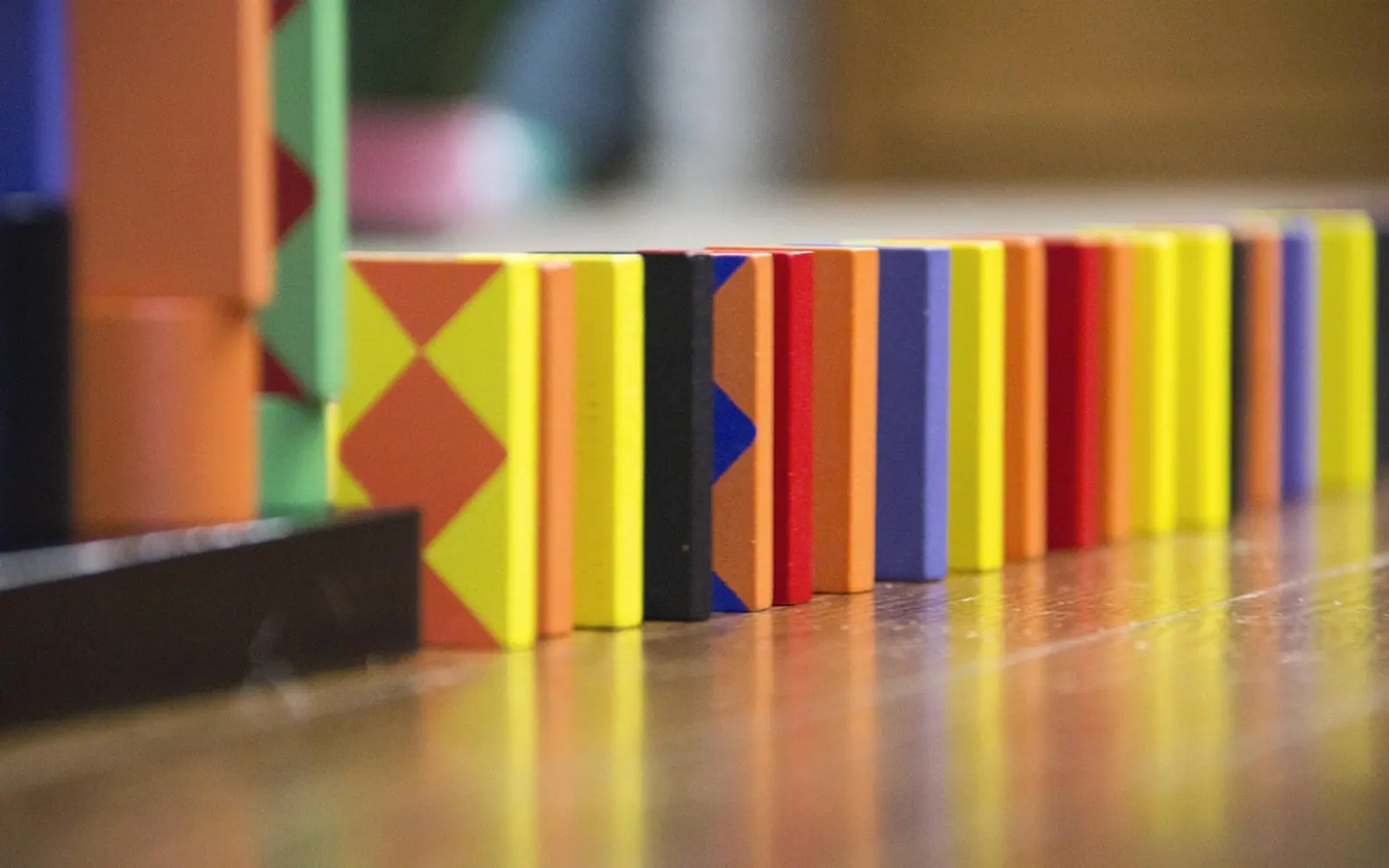
A set of Chinese dominoes has 32 tiles, each showing two ends with one to six pips; there are no blanks. Unlike a Western set, some tiles appear twice and others once:
- Civil tiles come in identical pairs. They include the two highest-ranking tiles in normal play: Teen, the double six, and Day, the double one.
- Military tiles are single tiles that form pairs by total rather than by appearance, for example two different tiles that each add up to nine.
- Gee Joon is a special pair of two military tiles that together make the highest pair in the game. Each Gee Joon tile can also count as either 3 or 6, whichever helps the hand.
Tables provide a ranking chart, and there is no shame in using it. Many regular players still glance at it.
Scoring a two-tile hand
Add the pips on both tiles and keep only the last digit. A hand of 7 and 8 pips makes 15, which scores 5; a hand totalling 20 scores 0. The best possible non-pair score is 9, the same counting that governs baccarat, explained in our guide on how to play baccarat.
A few combinations sit above the ordinary scores:
| Hand | Made from | Ranking |
|---|---|---|
| Pair | Two matching tiles (the Gee Joon pair is highest) | Beats any non-pair hand |
| Wong | Teen or Day plus any tile worth 9 | Counts as 11, above any 9 |
| Gong | Teen or Day plus any tile worth 8 | Counts as 10, just under Wong |
| Ordinary hand | Any other two tiles | Scored 0 to 9 by last digit |
When two hands have the same score, the one holding the higher-ranking single tile wins. If they are identical in every respect, a "copy", the banker wins, and that tie-break is one of the house's main advantages.
How a round runs
- Washing the tiles. The dealer mixes all 32 tiles face down, then builds them into eight stacks of four.
- Rolling the dice. Three dice decide which seat receives the first stack, and the rest are handed out in order around the table.
- Setting the hands. Each player arranges four tiles into a high hand and a low hand. The high hand must rank above the low hand, or the arrangement is invalid.
- The banker sets. The house banker follows a fixed method known as the house way; a player banker sets as they choose.
- Comparison. High is compared with high and low with low. Two wins pay even money less a commission, usually 5%; two losses lose the stake; one of each is a push.
Setting the four tiles
With four tiles there are only three ways to split them into two pairs, so the choice is narrower than it first looks. The usual priorities are these:
- Keep a pair together unless splitting it makes both hands clearly strong.
- Aim to win at least one hand, since a push protects the stake.
- Avoid putting everything into the high hand and leaving a hopeless low hand, as that invites a split result at best.
- When unsure, ask how the house would set it; many tables will tell you.
The same thinking applies to the card version, where seven cards become a five-card and a two-card hand; see how to play pai gow poker for the comparison.
Why the game moves slowly
Pushes are common, because many rounds end with one hand won and one lost. That makes pai gow tiles one of the calmer games on a casino floor: money changes hands less often than at most tables, and a stake tends to last. It is not cheaper in the sense of a smaller edge being guaranteed, but the pace is easy on a budget.
Common questions
Can a player be the banker?
At many tables, yes. A player who banks plays against everyone else at the table, often including the dealer's own hand, pays commission on net winnings, and must be able to cover the bets placed.
Is pai gow tiles related to other Asian dice and tile games?
Loosely. Dice are used only to decide the deal here, whereas in sic bo they decide everything. Both are long-standing features of casinos in Macau and across the region.
Do I need to memorise the full ranking?
No. The chart at the table covers it, and the house way gives a sensible default for setting hands.
A slow game still costs money in the long run, so set your stake for the session in advance and leave when it is used. Pai gow is for adults, and casino gaming laws differ widely across Asia and elsewhere, so check what applies where you are.