Spanish 21 is a blackjack variant dealt from "Spanish" decks of 48 cards, in which all four tens have been removed while the jacks, queens and kings stay in. Losing four ten-value cards from every deck hurts the player, so the game compensates with generous extras: your blackjack always wins, your 21 always beats a dealer 21, five-card and longer 21s pay bonuses, and doubling and surrender are allowed far more freely. The aim, the card values and the dealer's routine are the same as in ordinary blackjack. What changes is the deck, a handful of payouts and the decisions that make sense. This page is written for adults.
What the missing tens do
In a standard deck, ten-value cards make up four of every thirteen. In a Spanish deck they make up three of every twelve, because only the picture cards are left. That small shift has two effects, both bad for the player on their own:
- Fewer naturals. An ace needs a ten-value partner to make blackjack, and there are fewer of them to go round.
- Weaker doubles. A double on 10 or 11 hopes for a ten-value card. With fewer in the shoe, those doubles land on 20 and 21 less often.
The dealer, on the other hand, busts slightly less often when drawing, since stiff hands are less likely to catch a ten. Left alone, that would make the game noticeably more expensive than classic blackjack. The rule list below is what brings it back into line.
The rules that give value back
Exact rules differ by casino and by software provider, so the panel or felt is always the final word. These are the features most tables share:
- Player blackjack always wins and pays 3 to 2, even if the dealer also has one.
- Player 21 always wins. A total of 21 made with three or more cards beats a dealer 21 instead of pushing.
- Double on any number of cards. You can double after hitting, not just on the first two cards.
- Double after splitting and, at most tables, resplitting up to four hands, including aces.
- Hit and double split aces, which ordinary blackjack usually forbids.
- Late surrender on your first two cards, and at many tables a "double down rescue", which lets you surrender a doubled hand and get back the original stake, losing only the doubled portion.
Compare these with a standard game, laid out in how to play blackjack, and the trade becomes clear: a weaker deck in exchange for a far wider set of options.
Bonus payouts on 21
Spanish 21 also pays extra for certain ways of reaching 21. These bonuses usually do not apply after doubling, and some are void after splitting, so check the small print on the table. A typical schedule looks like this:
| Hand | Usual payout |
|---|---|
| Five-card 21 | 3 to 2 |
| Six-card 21 | 2 to 1 |
| Seven or more cards totalling 21 | 3 to 1 |
| 6-7-8 or 7-7-7, mixed suits | 3 to 2 |
| 6-7-8 or 7-7-7, same suit | 2 to 1 |
| 6-7-8 or 7-7-7, all spades | 3 to 1 |
Many tables add a larger fixed prize for suited 7-7-7 when the dealer's upcard is also a seven, often tied to a minimum stake. These hands are rare, so they matter more for the feel of the game than for its long-run cost.
How the strategy changes
Because the deck is different and the bonuses reward long hands, a classic chart gives the wrong answer in a number of spots. The broad differences are easy to remember, even if the full Spanish 21 chart takes more study:
- Double less on 9 and 10. With fewer tens left, a single extra card is less likely to finish the hand strongly, so several classic doubles become hits.
- Hit more stiff hands. Against some small dealer cards, hitting a hard 12 to 16 with several cards in it can be better than standing, partly because the five-card and longer bonuses reward drawing.
- Use surrender more. Late surrender and the double down rescue appear on the Spanish 21 chart more often than surrender appears on a classic one.
- Splitting stays familiar. Aces and eights are still split, and tens are still kept together, as in the usual choices for splitting pairs.
The logic behind any chart is the same as for the regular game: each decision is the option that loses least on average. Our explainer on blackjack basic strategy covers where those answers come from, and doubling in particular is broken down in what double down means. For Spanish 21, find a chart printed for the exact variant, since the dealer's soft 17 rule and the bonus list both shift some answers.
Is Spanish 21 a better deal than regular blackjack?
It can be close. With good rules, notably a dealer who stands on soft 17 and the double down rescue on offer, the house edge for a player using the right chart is generally described as comparable to a good classic table. At tables where the dealer hits soft 17 or the rescue is missing, it rises. Two points tend to decide which game is cheaper for a given player:
- Which strategy you actually use. Playing Spanish 21 with a classic chart, or by instinct, gives back much of what the extra rules offer.
- What the alternative is. Against a classic table that pays only 6 to 5 on a blackjack, a well-ruled Spanish 21 game is usually the kinder choice. Against a full-pay 3 to 2 table with good rules, the gap is small either way.
Pace matters too. The extra decisions slow a table slightly, which lowers the number of hands per hour; a quick online version can run much faster. Cost per hour depends on both the edge and the speed, a point that also comes up in the comparison of baccarat and blackjack.
A few terms you will meet
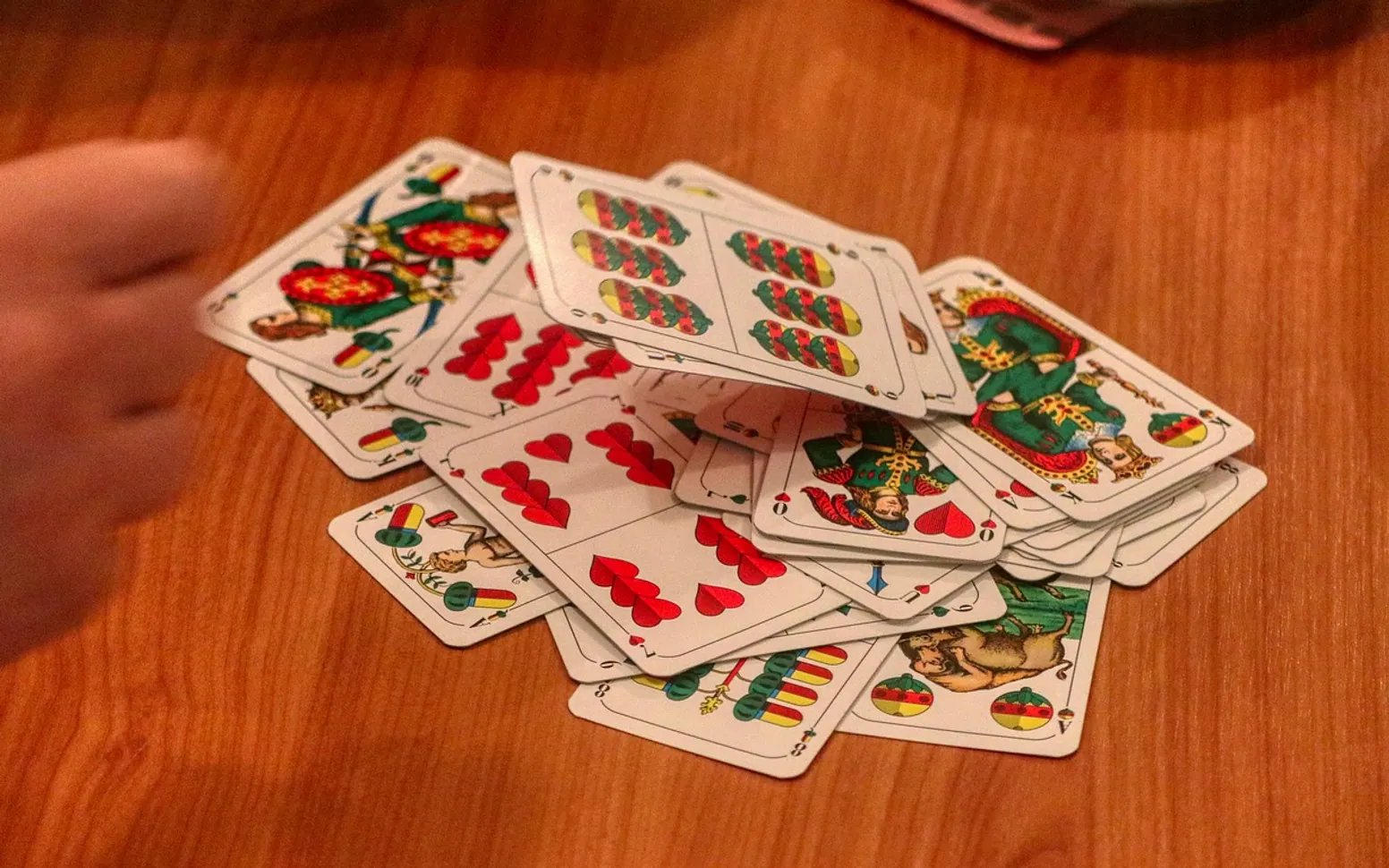
- Spanish deck: a 48-card deck with the four tens removed; the name comes from traditional Spanish playing cards, which have no tens.
- Super bonus: the large fixed prize for suited 7-7-7 against a dealer seven.
- Match the dealer: an optional side bet at some tables that pays when your first cards match the dealer's upcard; like most side bets, it costs more than the main game.
- Double down rescue: surrendering a hand after doubling, keeping the original stake back.
The extra rules make Spanish 21 lively, but they do not tip the game towards the player, and the house still keeps a share over time. Treat each session as paid entertainment with a fixed limit, play only if you are of legal age, and confirm that real-money table games are allowed where you live before you join a table.