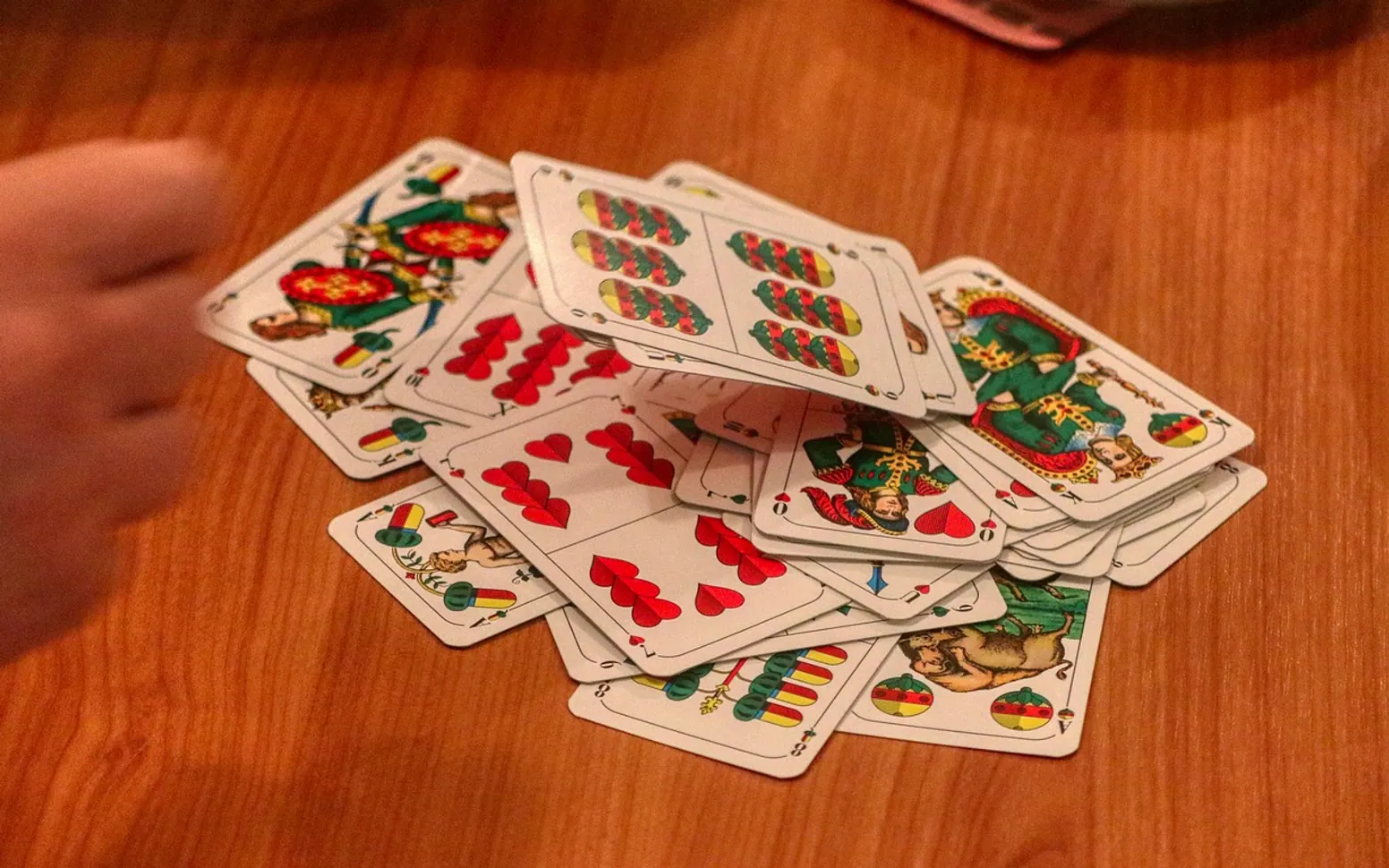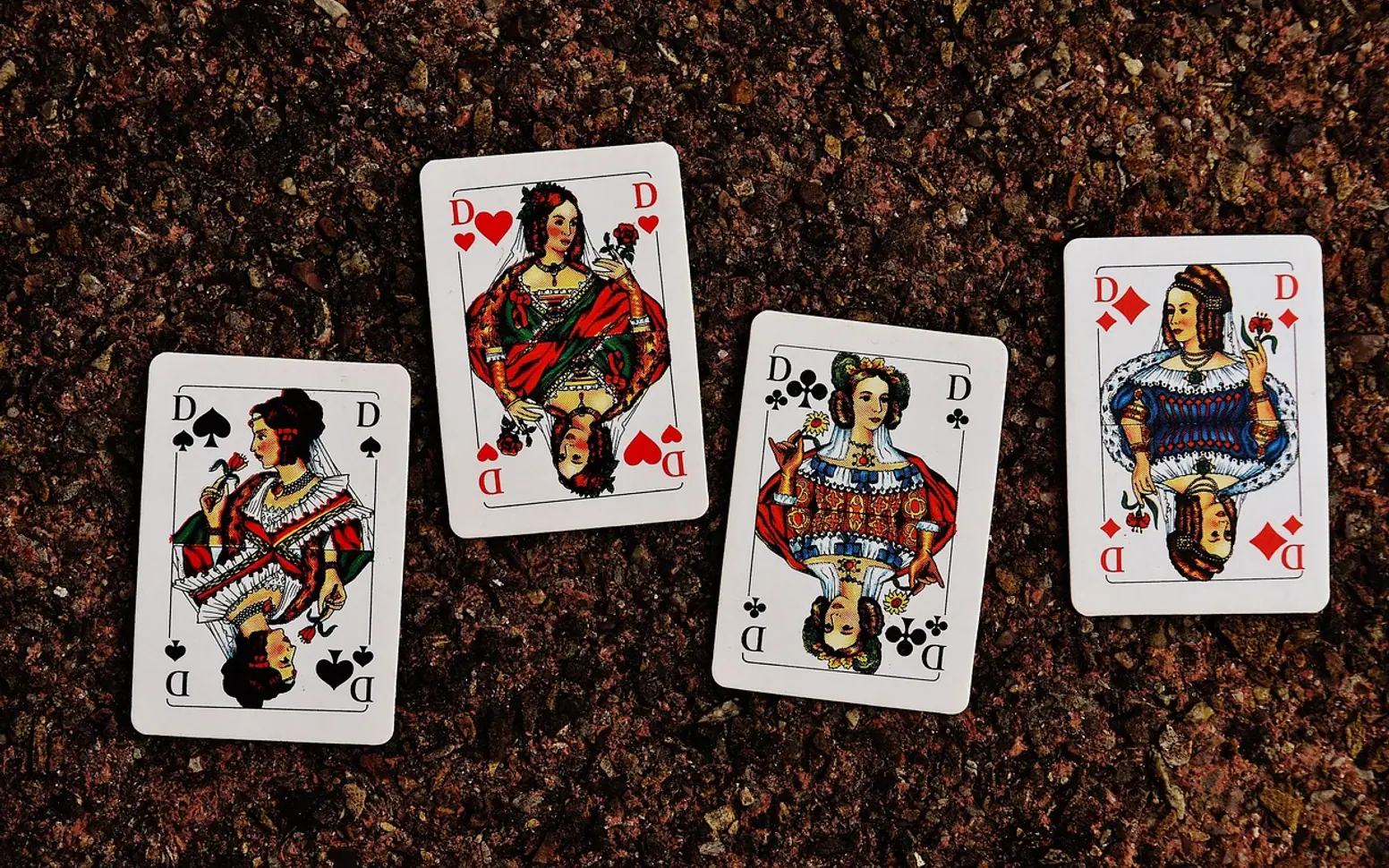
Chemin de fer is a form of baccarat in which the players, not the casino, act as banker in turn, and the shoe of cards moves around the table from one banker to the next. The house runs the game and takes a commission from winning banks, but it does not bet against anyone. It is the version of baccarat that grew up in French casinos and private rooms, and it differs from the punto banco tables found in most casinos today in who holds the bank and who makes the decisions. Readers should be 18 or older.
Where the name comes from
"Chemin de fer" is French for railway. The usual explanation is that the shoe travels around the table like a train moving between stations, stopping with each new banker. The game shares its counting with every other baccarat: cards from two to nine are worth their face value, tens and court cards count as zero, aces as one, and only the last digit of a total matters. The scoring is covered step by step in our guide on how to play baccarat.
How a round is played
- The banker sets the bank. The player holding the shoe puts up a stake. That amount is what the rest of the table may play against.
- Others accept it. Going around the table, players may cover part of the bank. One player may instead call "banco", offering to match the entire bank alone, which normally takes priority over partial bets.
- Two hands are dealt. The banker deals two cards to the punter hand (played by the player who has staked the most against the bank) and two to the bank's own hand.
- Naturals are shown. A total of 8 or 9 on two cards is a natural and is turned over at once; the round ends.
- Drawing decisions. Otherwise the punter decides whether to draw a third card, then the banker decides, within the limits described below.
- Settlement. If the bank wins, it keeps the stakes and the house takes its commission from the winnings; the same player keeps the shoe. If the bank loses, the shoe moves on to the next player.
A banker may also choose to pass the shoe voluntarily, at which point the role is usually offered to the next player in turn.
The choices players actually make
In punto banco every card is drawn according to a fixed table, and no one at the table decides anything except where to place a bet. Chemin de fer keeps some decisions:
- The punter on 5. With a total of 0 to 4 the punter draws, and with 6 or 7 stands; on exactly 5 the punter may choose either.
- The banker in certain spots. In many situations the banker's play is fixed by house rules, but a few combinations of banker total and the punter's third card are left to the banker's judgement.
- Whether to call banco. Taking on the whole bank yourself is a decision about stake size, not about the odds of the hand.
The optional spots are close calls. They add interest, but they do not turn chemin de fer into a game of skill in the way decisions shape blackjack.
Chemin de fer, punto banco and baccarat banque
| Feature | Chemin de fer | Punto banco | Baccarat banque |
|---|---|---|---|
| Who banks | Players, in rotation | The casino | One banker for a long stretch, often by auction or by house arrangement |
| Hands dealt | Bank and one punter hand | Banker and Player | Bank and two punter hands |
| Drawing | Some choices left to players | Fully fixed | Some choices left to players |
| Where you meet it | European casinos and private rooms | Almost every casino and online lobby | Rarely seen today |
Punto banco took over largely because a casino can run it with fixed rules, minimal decisions and predictable commission. Its smaller cousins, including mini baccarat and live speed tables, are compared in our piece on mini baccarat and punto banco.
On screen and in fiction
The game owes some of its glamour to film. The 1962 film Dr. No introduces its secret-agent hero at a chemin de fer table, and the image of evening dress, a long table and a quiet call of "banco" has stuck to baccarat ever since. Real games are far less dramatic: most rounds pass in a minute or two with nothing more than a few flipped cards.
Questions people ask
Is chemin de fer offered online?
Rarely. Online lobbies and live studios almost always run punto banco, sometimes with a squeeze or speed variation, because it needs no player banker.
Does the bank have an edge?
The bank's hand acts second and so has a slight advantage, much as the Banker bet does in punto banco. The commission taken from winning banks is what pays the house for running the game. Any optional bets beyond the main game carry their own price, as explained in baccarat side bets.
Do I have to bank when the shoe reaches me?
No. A player can decline, and the shoe is offered to the next seat.
Private-room games often run at stakes well above everyday budgets. Fix your own limit before you sit down, whatever the table minimum says, and make sure the game is lawful where you are playing.